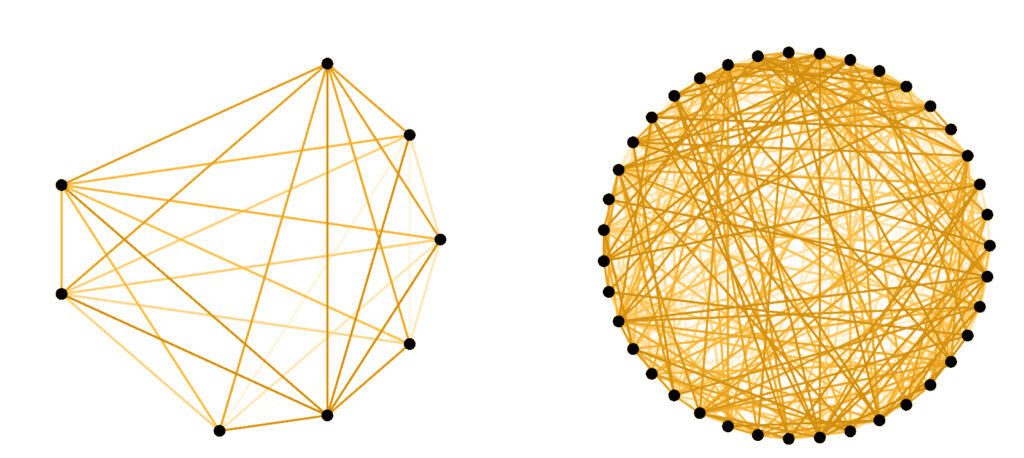

WHAT IS THIS HIERARCHIZATION OF OBJECTS AND WHY IS IT FOR?
The hierarchy of objects is a very important element of the masterplan. It contains selected objects that will be distinguished from others. Hierarchy allows you to create a coherent image of the city, indicate more important objects and directions, and prevent chaos.
When developing a city lighting plan, the question arises which objects should be highlighted and how. A city with its own structure has places and facilities that stand out from others.
To make a selection, clear and transparent rules for their selection must be established.
Analyzing the life of the city, the conclusion comes to the conclusion that the tourist value of a given facility is related to its historical, architectural and functional value. It was noticed that usually the objects that enjoy the greatest interest among tourists are also the objects that deserve to be distinguished also at night, in the form of attractive illumination.
The attractiveness of the facility results from many factors. The more these factors there are, the more attractive the object is. This line of thinking led to the creation of a hierarchy of objects on a three-level scale. The first level determines the objects that should be highlighted the most. The second degree indicates the distinction of the object, but weaker than the first degree. The third level defines objects that should be distinguished from the “crowds” of the surrounding buildings, but not as intensively as the higher levels.
The facility should stand out from others primarily due to its more or less decorative lighting style. Objects with the third level of hierarchy should only be distinguished from their surroundings by uniform lighting and possibly emphasizing a small number of architectural details.
Objects with the first level of hierarchy should be distinguished by attractive lighting that highlights many architectural details. It is possible to use there a small amount (only for small parts of the façade, e.g. entrance, sculpture, architectural element) also the so-called “light creation” (see Light Diagram), i.e. lighting that creates a new image of a given element (e.g. by using a light spot giving an image completely different from daylight, or by using a light color other than white).
Objects of the second level of hierarchy should be illuminated indirectly in relation to the two mentioned above.
When designing, individual objects should be approached individually, which is why the differentiation of lighting styles depending on the level of the object’s hierarchy has been proposed in the form of “interlocking” compartments. Thanks to this, this principle can be flexibly applied to specific buildings, depending on the number of details they have.
DIFFERENT EXAMPLES OF LIGHTING THE SAME BUILDING – DEPENDING ON THE DEGREE OF ITS HIERARCHY


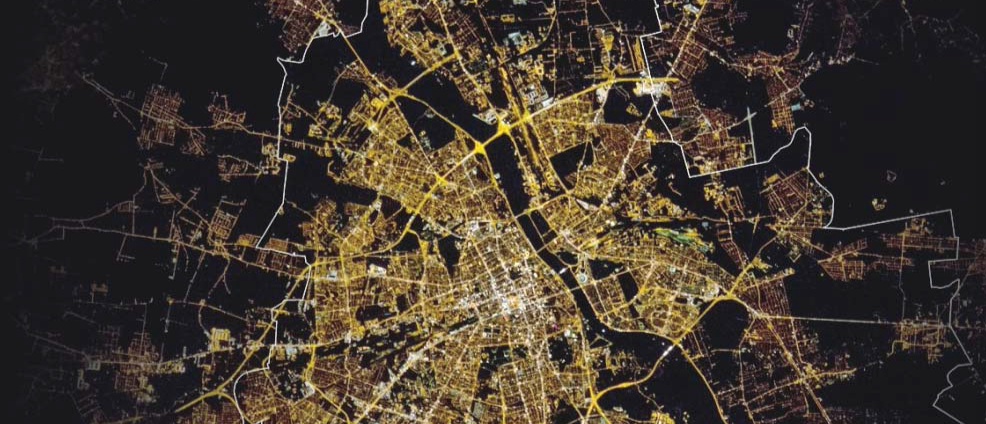
A transparent form of presenting a list of objects in three levels of hierarchy will enable the introduction of “light order” in the planned area. The reason for creating such a list was the fact that the existing city lighting was the so-called “war of lights”. Facilities that house shops or restaurants, with their flashy lighting, drown out facilities that are more attractive and important. Another problem is the lack of consistency in the design of individual illuminations. Each facility owner decides on the lighting design in the context of an individual building, without taking into account the surrounding situation. In this way, illumination in an individual assessment may be good, but in the context of the environment, it does not match in terms of style or intensity. In fact, urban architecture is doomed to the interplay of neighboring objects and must live in symbiosis with them. A list of objects with assigned levels of hierarchy will allow you to select the most important objects without disconnecting them from the coherent image of the city.
To make the classification of buildings objective, many guides and tourist guides were analyzed to select a list of the most frequently distinguished buildings. Typically, the criteria for selecting objects from guides were:
- history (historical value – e.g. the connection of the facility with important events, inhabitants)
- architecture (aesthetic value – e.g. attractive form, decorations, unique elements)
- function (e.g. the seat of a valuable institution, museum or gallery or a special, unique meeting place)
- recognition (popularity of the object, recognizability, associating its image with a specific place, symbolism)
- location (the facility is located in a place with heavy traffic, popular, well-known, easily visible, symbolic).
The list of objects is selected on the basis of an analysis of the urban fabric of the city and many guides and tourist guides, including online ones.
Then, the “Object Hierarchy Table” prepared in this way was supplemented by specialists from the Department of Spatial Planning and Monument Protection, which gave it its final shape presented in two tables.
EXAMPLE LIST OF FACILITIES FROM THE “HIERARCHY OF FACILITIES TABLE” LOCATED AT THE FIRST SECTION OF PIOTRKOWSKA STR.

Based on the list, you can analyze the nature of more important objects and establish consistent rules for distinguishing objects. You then plan, for example, luminance ranges, color temperatures, the degree of contrast, the number of details that can be distinguished, and even the nature of the lighting.
And so, step by step, we add another element to build a coherent and attractive night view of the city. Then building a streets’ hierarchy. See you soon!